Creative & Artistic
Drawing & Sketching for Beginners: Your Complete Getting Started Guide
Drawing and sketching is a creative hobby in which you use pencils, pens, charcoal, or other mark-making tools to create images on paper or a digital surface. It is one of the most accessible hobbies in the world — requiring nothing more than a pencil and a piece of paper to begin — and one of the most rewarding to develop over a lifetime.
Drawing & Sketching at a Glance
- Origins: Drawing dates to prehistoric cave art; the modern graphite pencil was developed in Borrowdale, England, around 1565
- Core tools: Graphite pencils (HB, 2B, 4B, 6B), sketchbook, eraser, and blending stump
- Start-up cost: As little as $5–$30 for a complete beginner set
- Time to see progress: Noticeable improvement within 3–6 months of daily practice (20–30 min/day)
- Community size: The r/learnart and r/sketching communities on Reddit have a combined membership of over 10 million
- Physical demand: Very low — suitable for all ages and abilities
- Transferable skills: Builds observation, patience, spatial reasoning, and hand-eye coordination
What Is Drawing and Sketching — and Why Is It Such a Popular Hobby?
Drawing and sketching is the practice of creating images by applying marks to a surface, most commonly using graphite pencils, pens, charcoal, or coloured pencils on paper. Sketching typically refers to quick, exploratory marks used to capture ideas or observe the world — loose and informal in nature. Drawing often describes more finished, deliberate artwork where accuracy and technique are the primary focus. In practice, the two skills develop together and every artist uses both.
As a hobby, drawing and sketching require no prior talent, no expensive equipment, and no dedicated studio space. A 2019 study from Drexel University found that just 45 minutes of creative art-making — including drawing — significantly reduced cortisol (the body's primary stress hormone) in participants regardless of their prior experience. According to a 2023 report by the Arts Council England, drawing ranked as the most commonly practised visual art form in the UK, with an estimated 8.5 million adults identifying as regular sketchers or drawers.
HobbyZHQ covers drawing and sketching as part of our Creative & Artistic category, where you'll find a wide range of creative hobbies suitable for beginners through to advanced practitioners.
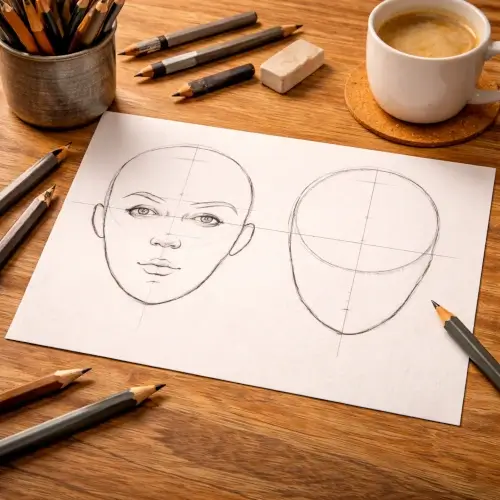
How Do I Get Started with Drawing and Sketching as a Beginner?
Getting started with drawing and sketching is simpler than most beginners expect. You don't need lessons, expensive supplies, or natural talent — just a consistent approach and willingness to practise. Follow these steps to build a strong foundation from day one.
- Gather a basic starter kit. All you need initially is an HB pencil, a 2B pencil, a small sketchbook (A5 is ideal for portability), and a soft eraser. A beginner graphite pencil set from Staedtler or Faber-Castell — containing grades from 2H to 6B — costs around $7–$12 and covers every foundational technique.
- Start with basic shapes and lines. Before attempting complex subjects, spend a week or two practising straight lines, curved lines, circles, ellipses, and boxes in different orientations. This trains hand-eye coordination and familiarises you with pencil pressure control — both critical foundations for everything that follows.
- Learn to draw from observation, not memory. Place a simple object — a cup, a shoe, a piece of fruit — in front of you and draw what you actually see, not what you think it looks like. Observational drawing is the single most effective skill-building technique, and it is how every classical artist from Leonardo da Vinci to Rembrandt developed their abilities.
- Understand the basics of shading and value. Value refers to the relative lightness or darkness of a tone. Practising smooth transitions from light to dark (called a value scale) teaches you how to create the illusion of three-dimensional form using only marks on a flat page. This is the foundation of realistic drawing.
- Copy work from artists you admire. Copying master drawings is a time-honoured learning technique used in every major art school in the world. It is not plagiarism — it is deliberate practice. Choose a simple artwork, replicate it as closely as you can, and analyse what you learn about mark-making, proportion, and composition in the process.
- Follow a structured free course or YouTube series. Channels such as Proko, Alphonso Dunn, and Draftsmen (hosted by professional illustrators Stan Prokopenko and Marshall Vandruff) offer free, structured beginner drawing series. Proko's figure drawing tutorials in particular are widely regarded as the best free art education available online.
- Sketch daily — even for just 15 minutes. Consistency matters more than session length. Carry a small sketchbook and draw whatever is around you: a hand, a plant, a view from a window. Regular sketching builds observational habits that improve every area of your drawing faster than occasional long sessions ever could.
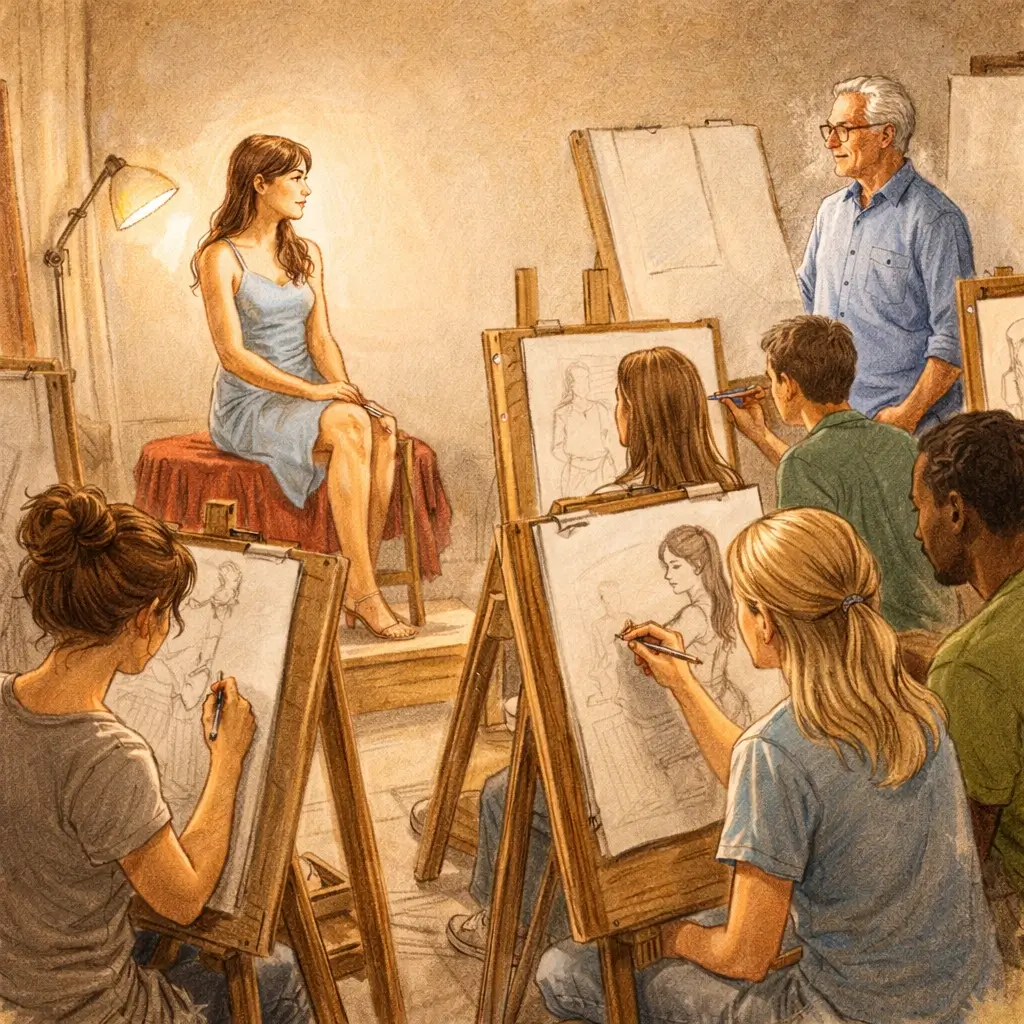
- Join a community and share your work. Communities such as r/learnart and r/ArtFundamentals on Reddit, or Sketchbook Skool, provide structured feedback and encouragement. Receiving constructive critique from more experienced artists accelerates your improvement significantly and keeps motivation high.
What Equipment Do I Need for Drawing and Sketching — and How Much Does It Cost?
Drawing and sketching are among the most affordable creative hobbies available. The table below compares what a beginner and an intermediate artist typically uses, with approximate prices in USD.
| Item | Beginner (Budget) | Intermediate (Mid-Range) |
|---|---|---|
| Graphite pencil set | $7–$12 (Staedtler or Faber-Castell 12-piece) | $20–$35 (Derwent Graphic or Caran d'Ache) |
| Sketchbook | $5–$10 (A5 or A4, 90gsm cartridge paper) | $18–$35 (Leuchtturm1917 or Moleskine Art) |
| Eraser | $2–$4 (Staedtler Mars plastic) | $5–$12 (kneaded eraser + vinyl eraser set) |
| Blending stump/tortillon | $3–$6 (pack of 6) | $8–$15 (chamois leather + stump set) |
| Pen/ink option | $4–$8 (Staedtler Pigment Liner set) | $15–$30 (Micron or Rotring Isograph set) |
| Charcoal (optional) | $5–$9 (compressed & vine charcoal pack) | $15–$25 (Nitram or General's charcoal set) |
| Drawing board & clips | Not required at beginner stage | $20–$45 (A3 lightweight board) |
| Estimated total (starter) | $21–$49 | $100–$200+ |
The most important thing to note is that equipment quality has very little impact on early-stage improvement. A $7 pencil set and a $5 sketchbook are entirely sufficient for the first 6–12 months of learning. Upgrading materials should only happen when your skills have genuinely outpaced what your current supplies can do.
Is Drawing Hard to Learn? Top Tips for Beginner Sketchers
Drawing has a reputation for requiring natural talent, but research and the experience of millions of self-taught artists tell a different story. Drawing is a skill — one that responds to deliberate practice exactly like learning a language or a musical instrument. These tips will help you progress faster and avoid the most common beginner mistakes.
- Draw with your whole arm, not just your wrist. Wrist-only drawing creates tight, cramped marks. Resting your elbow on the table and moving from the shoulder produces smoother, more confident lines — especially for longer strokes and curves.
- Use light pressure first, then build up. Start every drawing with the lightest possible marks so mistakes are easy to erase or correct. Gradually increase pressure as forms become more defined. This is how professional artists sketch — not by committing immediately to dark, final lines.
- Measure proportions before you commit. Hold your pencil out at arm's length and use it as a measuring tool against your subject. Compare heights, widths, and angles. Proportion errors are the main reason drawings look "off", and taking an extra 30 seconds to measure before drawing saves significant frustration.
- Avoid outlining everything. Real objects do not have black outlines around them. Instead of drawing lines, try to draw the transitions between light and shadow — this produces drawings that feel more three-dimensional and realistic.
- Study negative space. Rather than drawing the object, try drawing the shapes of the empty space around it. This technique, popularised by Betty Edwards in Drawing on the Right Side of the Brain (1979), bypasses the brain's tendency to draw symbols rather than what is actually there.
- Keep old sketchbooks and review them. Progress in drawing is gradual and can be hard to see day to day. Flipping back through a sketchbook from six months ago is often genuinely surprising — it provides objective evidence of how far you've come and is one of the most powerful motivators available.
- Embrace bad drawings. Every artist — including professionals — produces work they dislike. The volume of output matters more than the quality of any individual piece at the beginner stage. Filling a sketchbook is always more valuable than agonising over a single drawing.
What Are the Benefits of Drawing and Sketching as a Hobby?
Drawing and sketching offer an unusually broad range of cognitive, emotional, and social benefits — many of which are backed by peer-reviewed research.
- Stress reduction: A 2016 study published in the journal Art Therapy found that 45 minutes of creative art-making, including drawing, significantly lowered cortisol levels in 75% of participants, regardless of prior art experience. The focused, repetitive nature of sketching produces a meditative state similar to mindfulness practice.
- Improved observation skills: Regular drawing trains you to truly observe the world rather than simply looking at it. Artists notice proportion, light, shadow, colour temperature, and spatial relationships that most people overlook entirely — a perceptual sharpening that extends well beyond the sketchbook.
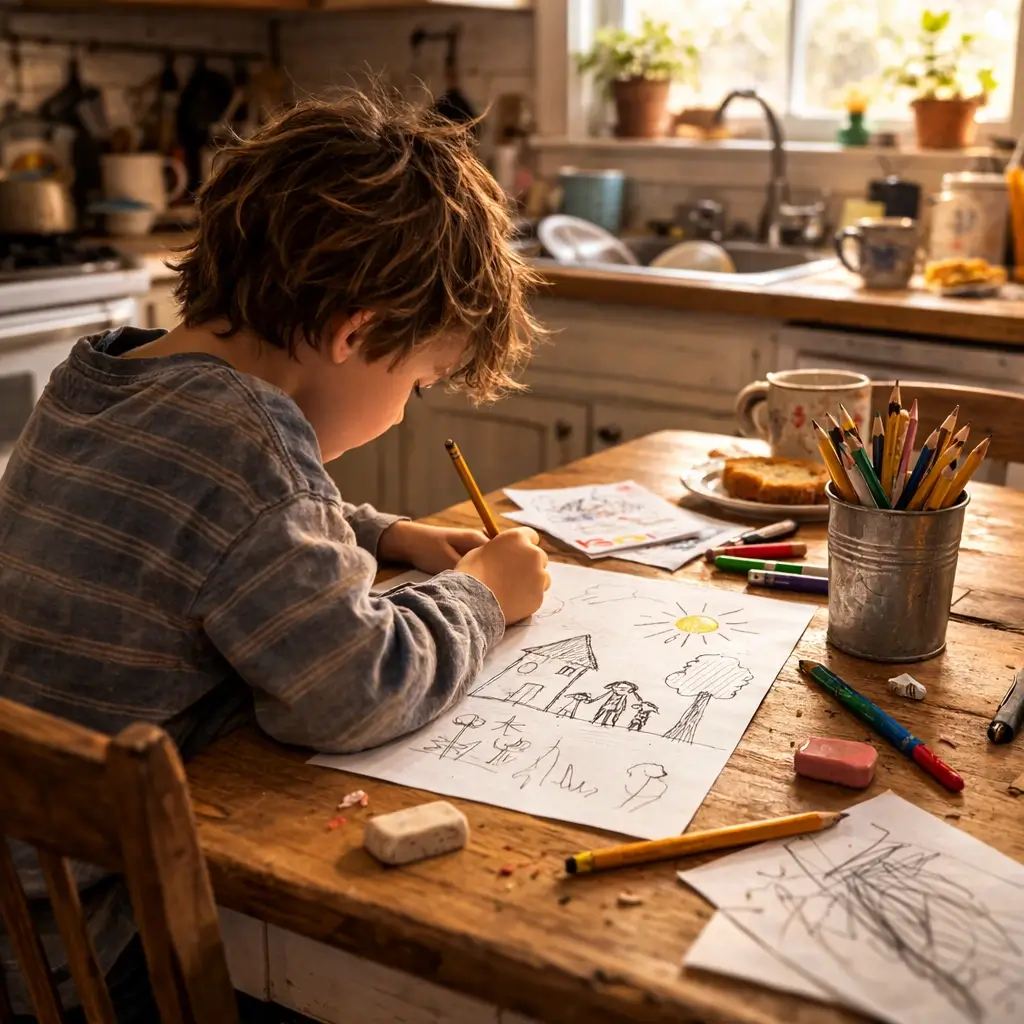
- Fine motor skill development: Pencil control, line weight variation, and detailed shading all build and maintain fine motor precision. This is particularly beneficial for children in developmental stages and for older adults maintaining dexterity.
- Cognitive and memory benefits: Research from the University of Waterloo (2018) found that drawing information to be remembered was significantly more effective as a memory encoding strategy than re-reading, summarising, or visualising it. Sketching notes or concepts is a genuinely superior study technique.
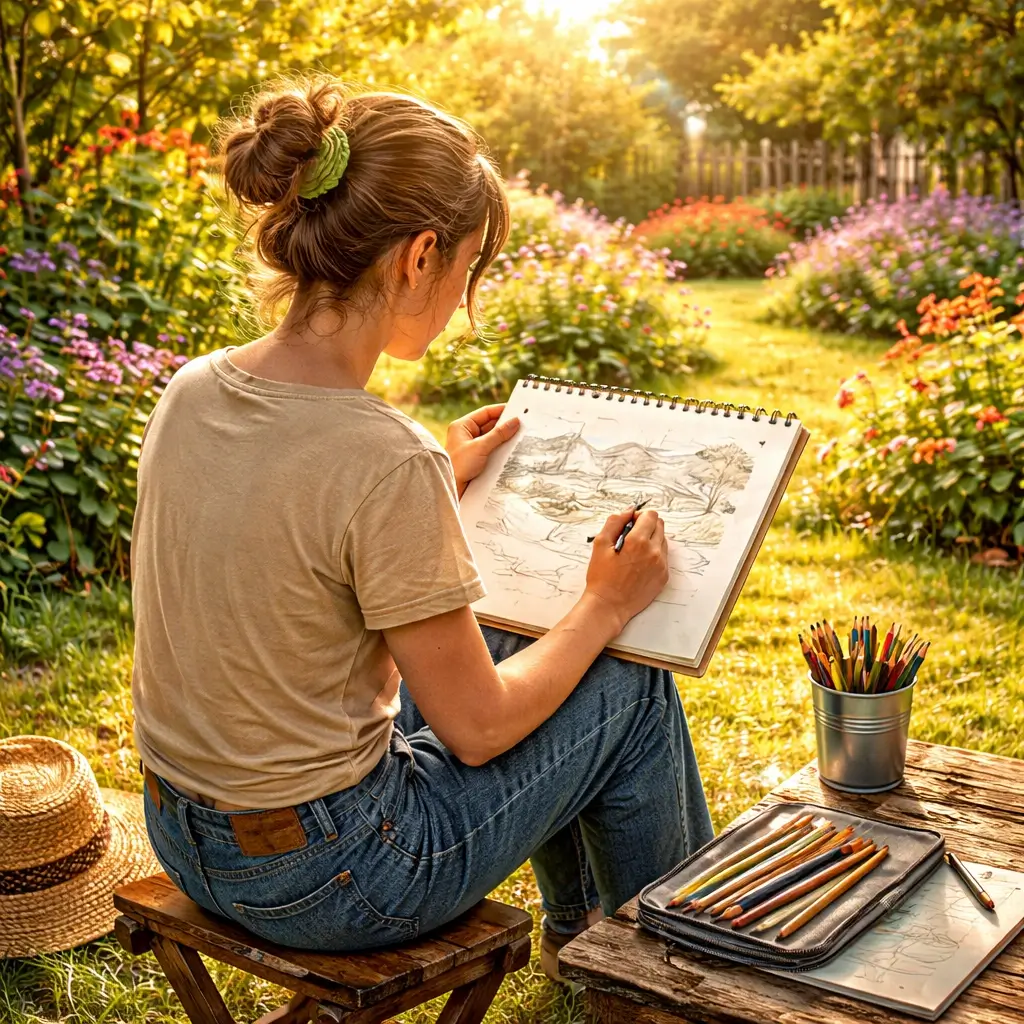
- Low cost, high accessibility: Unlike most hobbies, drawing requires no ongoing subscription, membership, venue, or equipment beyond initial supplies. It can be practised anywhere — at a kitchen table, on a commute, or outdoors — making it one of the most portable and democratic creative pursuits available.
- Foundation for related creative hobbies: Drawing and sketching directly develop skills used in watercolour painting, digital illustration, architecture, graphic design, and animation. For anyone considering broader creative pursuits, a foundation in drawing is one of the most valuable investments of time possible.
Frequently Asked Questions About Drawing & Sketching
Is drawing and sketching hard to learn as a beginner?
Drawing and sketching are accessible to complete beginners. The foundational skills — line control, proportion, and basic shading — can be learned with consistent daily practice over a few weeks. A 2019 study from Drexel University found that even non-artists showed measurable creative improvement after short drawing sessions. Starting with simple subjects like geometric shapes and everyday objects is the most effective approach for new learners.
What do I need to start drawing and sketching?
To start drawing and sketching you need very little: a pencil (HB or 2B), a sketchbook or plain paper, and an eraser. A set of graphite pencils ranging from 2H to 6B costs as little as $7–$12 and covers every beginner technique. Brands like Staedtler, Faber-Castell, and Derwent are widely recommended by art teachers. You do not need a drawing tablet, special software, or formal art classes to begin.
How long does it take to get good at drawing?
Most beginners see noticeable improvement within 3–6 months of consistent practice — typically 20–30 minutes a day. Reaching a confident intermediate level, where you can draw from observation and produce recognisable portraits or landscapes, usually takes 1–2 years. Progress depends heavily on deliberate practice: drawing from life and studying the work of other artists accelerates improvement faster than drawing from imagination alone.
What is the difference between drawing and sketching?
Sketching typically refers to quick, loose marks made to capture an idea, plan a composition, or record something from observation — informal and exploratory in nature. Drawing tends to describe more finished, deliberate artwork where accuracy, detail, and technique are the primary focus. In practice, the two overlap heavily, and most artists use sketching as the foundation for more refined drawings. Both skills develop together and complement each other naturally.
Can adults learn to draw if they have never drawn before?
Yes — adults can absolutely learn to draw from scratch. Drawing is a skill, not an innate talent, and it responds to practice at any age. Betty Edwards' Drawing on the Right Side of the Brain has helped millions of adults develop observational drawing ability with no prior experience. Many adult learners find that patience and methodical practice gives them an advantage over younger students who may approach learning more impulsively.