Games & Play
Trading Cards for Beginners: Your Complete Getting Started Guide
Trading cards are collectible cards featuring sports players, fantasy characters, game mechanics, or pop culture artwork that people collect, trade, and play games with. Whether you want to build a competitive deck, hunt for rare cards, or simply enjoy the thrill of opening a pack, trading cards for beginners is an accessible and deeply rewarding hobby at every budget.
Trading Cards at a Glance
- Origins: The modern trading card hobby began with baseball cards in the 1860s; the first Trading Card Game (TCG), Magic: The Gathering, launched in 1993
- Market size: The global trading card market was valued at approximately $13.5 billion in 2022, according to Grand View Research, with continued growth projected through 2030
- Pokémon TCG: The Pokémon Company has sold over 43.2 billion Pokémon cards worldwide as of 2023 — the best-selling TCG in history
- Start-up cost: As little as $5–$15 for a single booster pack or starter deck
- Major formats: Collecting (sports cards, vintage sets), Trading Card Games (Pokémon, Magic: The Gathering, Yu-Gi-Oh!), and hybrid collecting/playing
- Physical demand: Very low — a seated hobby suitable for all ages
- Community: TCGPlayer, the largest online trading card marketplace, has over 40 million registered users as of 2024
What Are Trading Cards and Why Are They Such a Popular Hobby?
Trading cards are printed cards — typically the size of a standard playing card — that feature artwork, statistics, characters, or game mechanics, and are produced in sets with cards of varying rarity. The hobby divides broadly into two main pursuits: collecting, in which people acquire and preserve cards for their aesthetic, sentimental, or financial value; and playing, in which cards are used as game pieces in structured, strategic matches against opponents. Many enthusiasts do both, and the two activities overlap significantly in games like Magic: The Gathering and the Pokémon TCG.
The trading card market experienced its most significant growth surge in 2020 and 2021, when pandemic conditions drove a worldwide collecting boom. According to eBay's 2021 trading report, sports card sales on the platform increased by 142% year-on-year in 2020. While the market has since stabilised, interest has remained substantially higher than pre-2020 levels across all formats — from vintage baseball cards and Pokémon first editions to modern Magic: The Gathering sets. Grand View Research valued the total global trading card market at $13.5 billion in 2022.
HobbyZHQ covers trading cards as part of our Games & Play category, where you'll find competitive, creative, and casual gaming hobbies for every type of player.


How Do I Get Started with Trading Cards as a Beginner?
Getting started with trading cards for beginners is straightforward once you decide which direction interests you most — collecting, playing, or both. The steps below apply broadly across all formats, with specific guidance for each path where relevant.
- Decide whether you want to collect, play, or both. Collecting focuses on building a set or chasing rare cards, often with an eye toward condition and long-term value. Playing a Trading Card Game (TCG) means building a deck and competing against other players, either casually at home or at organised events. Many beginners start with a TCG — which combines both activities naturally — before branching into pure collecting later.
- Choose your game or collecting focus. For beginners who want to play, the Pokémon TCG is the most recommended starting point for its simple rules, low cost, and welcoming community. Magic: The Gathering suits those who want deeper strategic complexity. Yu-Gi-Oh! is popular with fans of the anime franchise. For collectors, Topps (baseball, soccer) and Panini (basketball, football) are the dominant sports card publishers, with modern sets widely available at retail price and vintage cards traded online.
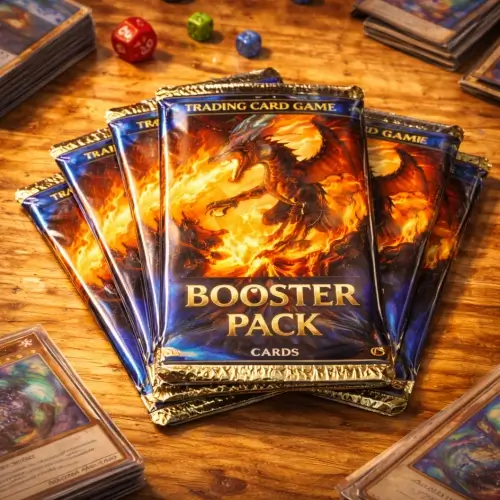
- Buy a starter deck or a small number of booster packs. For TCG beginners, a pre-constructed starter or theme deck is the best entry point. These decks ($12–$55 depending on the game) are ready to play immediately and include a rulebook. Avoid buying large quantities of booster packs before you understand what you're looking for — a single booster pack ($5–$8) or a simple collection tin ($20–$30) is a lower-risk way to experience pack opening before committing further.
- Learn the rules of your chosen game. Every major TCG provides a free digital rulebook and beginner tutorial on its official website. The Pokémon TCG Live app (free on PC and mobile) includes an interactive tutorial that teaches the rules through guided play — widely regarded as the best learning tool for new Pokémon TCG players. Magic: The Gathering Arena (free to download) serves the same function for Magic beginners.
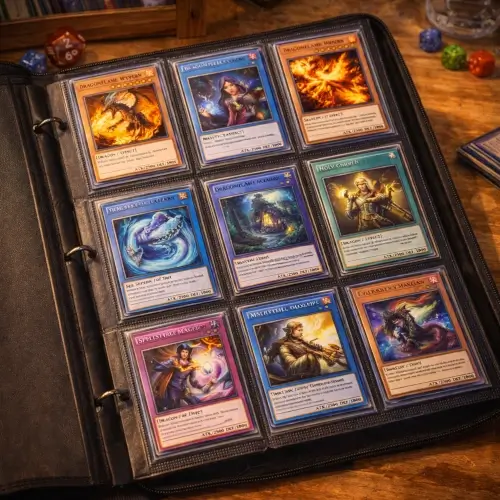
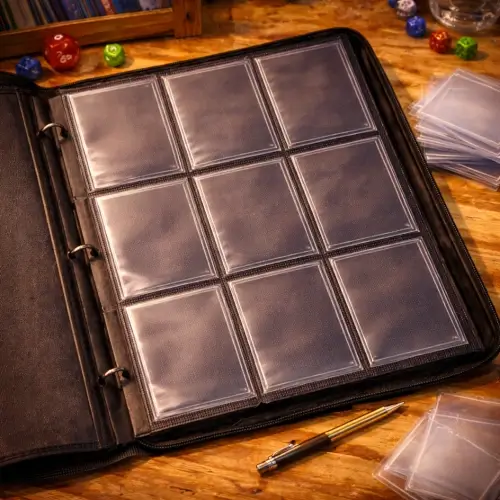
- Protect your cards from the start. Card condition directly affects both playability and value. Sleeve all cards you intend to play with in standard-size card sleeves from brands like Dragon Shield or Ultra PRO as soon as you open them. Place any cards you consider collectibles into rigid top-loaders or a binder with acid-free pages. Damage from bending, moisture, and UV light is permanent and irreversible.
- Research card values before buying or trading. TCGPlayer.com and eBay's "Sold Listings" filter are the most reliable sources for current market prices on individual cards. Check both before making any purchase or trade of significant value. Card prices fluctuate based on tournament meta, new set releases, and collector demand — a card worth $5 today may be worth $30 in six months if it becomes tournament-relevant, or $1 if it rotates out of the competitive format.
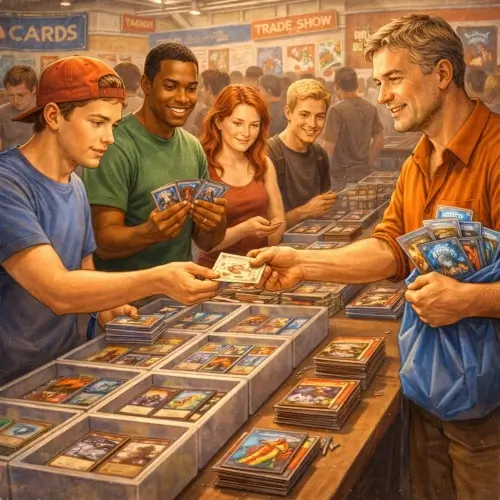
- Find your local game store (LGS) or online community. Local game stores run weekly organised play events — Friday Night Magic for Magic: The Gathering, Pokémon League Challenges, and Yu-Gi-Oh! tournaments — that are explicitly designed to be beginner-friendly. These events are one of the most effective ways to improve quickly, trade with others, and connect with the hobby community in person. Online, Reddit communities such as r/pkmntcg, r/magicTCG, and r/tradingcardcollecting are active and welcoming to newcomers.
What Do I Need to Start Collecting Trading Cards — and How Much Will It Cost?
Trading cards can be enjoyed at almost any budget. The table below compares what a beginner and an intermediate collector or player typically needs, with approximate prices in USD.
| Item | Beginner (Budget) | Intermediate (Mid-Range) |
|---|---|---|
| Starter deck or booster pack | $5–$15 (single booster or starter deck) | $45–$100 (booster box or premium bundle) |
| Card sleeves | $5–$8 (100 standard penny sleeves) | $12–$20 (100 premium Dragon Shield or KMC sleeves) |
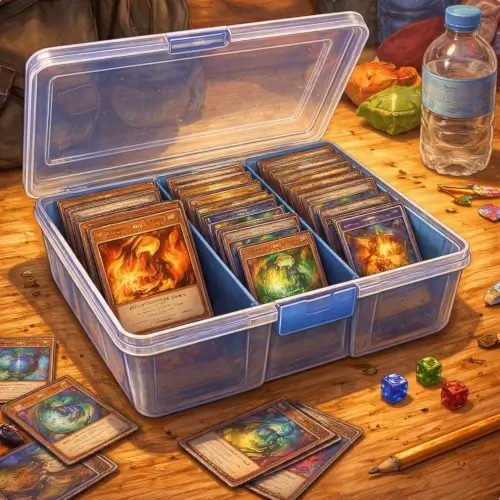
| Card storage | $3–$8 (800-count BCW storage box) | $15–$30 (Ultra PRO binder with acid-free pages) |
| Top-loaders (rigid card holders) | $5–$8 (25-pack, standard size) | $15–$30 (mixed pack including semi-rigid and one-touch magnetic) |
| Deck box (for TCG players) | $3–$6 (standard plastic deck box) | $15–$30 (premium leather or hard-shell deck box) |
| Playmat (for TCG players) | Not required at beginner stage | $15–$40 (licensed or custom rubber playmat) |
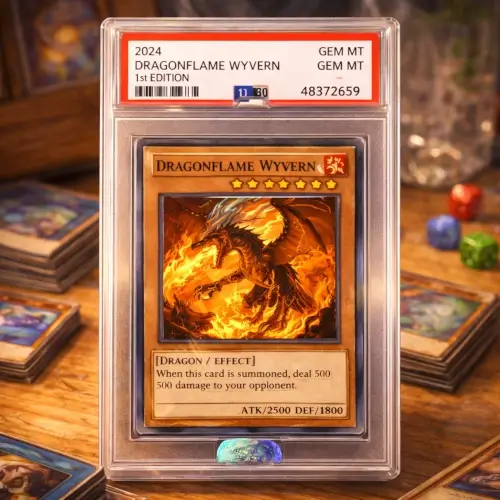
| Grading submission (PSA or Beckett) | Not required at beginner stage | $20–$100 per card depending on service tier |
| Estimated total (starter) | $18–$44 | $112–$320+ |
Ongoing costs for trading card collectors and players scale primarily with how aggressively you chase new sets or competitive staples. Many players maintain a modest monthly budget of $20–$50 and trade cards within their local community to manage costs — the hobby's built-in trading culture is one of the most effective ways to expand a collection without proportionally increasing spend.
Is Trading Cards a Good Hobby for Beginners? Top Tips to Get Started
Trading cards reward knowledge as much as investment — and beginners who understand the basics early avoid the most common and costly mistakes. These tips will help you get more enjoyment from the hobby from the very start.
- Don't buy in bulk until you know what you want. It is tempting to buy large quantities of booster packs early on, but the odds of pulling high-value cards from random packs are low by design. Beginners consistently get better value by purchasing individual cards they need directly from TCGPlayer or a local store, rather than relying on pack luck to build a specific collection or deck.
- Sleeve your cards before you play with them. A single match without sleeves can visibly wear the edges of a card, reducing its condition grade and resale value permanently. Dragon Shield Matte and KMC Hyper Matte are the most widely recommended sleeves for both durability and shuffle feel among competitive players.
- Learn to read rarity symbols before opening packs. Every major TCG and sports card set uses a consistent rarity system printed directly on each card — typically a circle (common), diamond (uncommon), star (rare), and variants for ultra-rare or secret rare cards. Understanding these symbols immediately tells you whether a card you have pulled has potential value, before you look anything up.
- Use TCGPlayer and eBay Sold Listings to price cards accurately. The single biggest mistake new collectors make is assuming the listed price of a card represents its real value. Always check what cards have actually sold for recently, not what sellers are asking. TCGPlayer's market price average and eBay's "Sold" filter both reflect real transaction prices and are the standard tools used by experienced collectors and dealers alike.
- Start with a format that fits your schedule. Competitive TCG formats range from quick (Pokémon matches average 20–30 minutes) to long (Commander games in Magic: The Gathering can last 2–3 hours with four players). If you have limited time or prefer solo collecting over playing, start with a collecting-focused entry point such as a sports card set or a sealed Pokémon collection tin rather than a competitive TCG.
- Attend a local game store event before investing heavily in a deck. Organised play events at local game stores allow you to borrow or proxy cards before buying them, play against experienced opponents who are typically happy to explain card interactions, and get a feel for whether competitive play appeals to you. Many stores also run beginner-specific nights explicitly designed for players in their first few months.
- Keep cards out of direct sunlight and humidity. UV exposure causes card art to fade and direct humidity causes warping — both permanently affect condition and value. Store your collection in a cool, dry location away from windows. Silica gel packets in your storage boxes are an inexpensive way to control moisture, particularly in humid climates.
What Are the Benefits of Trading Cards as a Hobby?
Trading cards offer a distinctive mix of strategic, social, and even financial benefits that make them one of the most multidimensional hobbies available.
- Strategic depth and cognitive stimulation: Competitive TCGs such as Magic: The Gathering are studied by researchers as models of complex decision-making. A 2020 paper published in the Journal of Artificial Intelligence Research described Magic: The Gathering as computationally the most complex known real-world card game, requiring simultaneous evaluation of probability, resource management, and opponent psychology. Even casual play provides meaningful strategic exercise.
- Community and social connection: The trading card hobby has one of the most active organised play ecosystems of any tabletop pursuit. Local game stores run weekly events in cities and towns worldwide, and major tournaments — including the Pokémon World Championships and Magic: The Gathering Pro Tour — attract thousands of players internationally. The trading aspect of the hobby also creates natural, low-pressure social interaction between collectors at all levels.
- Pattern recognition and memory development: Learning the card pool of a TCG — which cards exist, what they do, and how they interact — builds a large, structured knowledge base that exercises long-term memory and categorical thinking. Experienced players often recognise and evaluate hundreds or thousands of individual cards instantly from artwork alone, a form of expert pattern recognition developed through sustained practice.
- Potential financial value: Unlike most hobbies, trading cards can appreciate significantly in value over time. First-edition Pokémon cards, vintage Magic: The Gathering sets, and rookie sports cards from star athletes have all produced substantial returns for long-term collectors. A 1999 Pokémon Base Set 1st Edition Charizard sold at auction for $420,000 in 2022. While exceptional cases, this financial dimension gives the hobby an additional layer of engagement not found in most leisure activities.
- Accessible at any budget: Trading cards are one of the few competitive hobbies with a genuinely low floor. A $13 Pokémon starter deck or a $15 Magic: The Gathering precon provides hours of gameplay and a functional introduction to the hobby without further investment. Many formats also have budget-viable competitive decks, meaning financial constraints do not necessarily prevent participation at organised events.
- Lifelong engagement: The trading card hobby spans age groups more broadly than almost any other competitive pursuit. Vintage collectors in their 60s and 70s share conventions and online communities with teenage competitive players. The breadth of formats — from children's introductory Pokémon play to the mathematically complex world of Magic: The Gathering Legacy — ensures there is always an entry point and a challenge appropriate to any stage of life.
Frequently Asked Questions About Trading Cards for Beginners
How much does it cost to start collecting trading cards?
Starting with trading cards can cost as little as $5–$15 for a single booster pack or starter deck. A Pokémon TCG starter deck retails for around $13, a Magic: The Gathering Commander precon for $45–$55, and a Yu-Gi-Oh! starter deck for around $12. Sports card collectors can begin by purchasing individual cards for under $5 on platforms like eBay or TCGPlayer. The hobby is highly scalable — you can spend as little or as much as your budget allows.
What is the best trading card game for beginners?
The Pokémon Trading Card Game is widely recommended as the best starting point for beginners. Its rules are simpler than Magic: The Gathering or Yu-Gi-Oh!, starter decks are inexpensive and ready to play straight out of the box, and the community is large and beginner-friendly. Magic: The Gathering is an excellent second choice for players who want deeper strategic complexity. For sports collectors rather than game players, Topps MLB or Panini NBA cards offer a straightforward entry point.
How do I know if my trading cards are valuable?
The value of a trading card is determined by three main factors: rarity (indicated by the symbol printed on the card), condition (graded from Poor to Gem Mint), and current demand. To check a card's market value, search recently sold listings on eBay or TCGPlayer — both show real transaction prices. For high-value cards, professional grading services such as PSA or Beckett provide a certified condition grade that significantly affects resale value and buyer confidence.
What is the difference between collecting trading cards and playing trading card games?
Collecting focuses on acquiring, organising, and preserving cards — often prioritising rare, vintage, or high-condition cards for their aesthetic or financial value. Playing a trading card game (TCG) focuses on building competitive decks and using cards as game pieces in structured matches. Many hobbyists do both. Collectors rarely play with their most valuable cards to avoid wear; competitive players often own duplicates — pristine copies for the collection and well-used copies for play.
How should I store and protect my trading cards?
All trading cards should be stored in individual penny sleeves at minimum — thin plastic sleeves costing around $5 per 100. Cards of moderate value should additionally go into a rigid top-loader or semi-rigid sleeve. High-value cards benefit from one-touch magnetic cases, which provide the strongest short-term protection available. For bulk storage, acid-free card boxes from brands like BCW or Ultra PRO hold hundreds to thousands of cards and protect against humidity and UV damage over time.